
Last updated on July 28, 2026
Peyronie’s disease can cause pain during erections, particularly during the acute stage of the condition when changes are actively occurring within the penile tissue. For some men, pain is one of the first symptoms they notice, sometimes appearing before obvious curvature, plaque, or visible deformity becomes clear.
Pain during erections can be unsettling because it immediately raises difficult questions.
Men often wonder whether they have injured themselves, whether the pain will worsen, whether sexual activity is making the problem worse, or whether the discomfort will eventually settle on its own. In many cases, the uncertainty becomes just as distressing as the pain itself.
Not every man with Peyronie’s disease experiences pain, and pain does not feel the same for everyone.
Some describe a sharp or stabbing discomfort. Others describe tightness, pulling, aching or a deep stretching sensation that only appears during full erection. Some men only notice pain during intercourse or when pressure is applied to a specific area of the shaft.
Pain alone does not confirm Peyronie’s disease. Painful erections can occur for several reasons. When pain appears alongside new curvature, plaque, narrowing or changes in erectile function, Peyronie’s disease may become part of the clinical picture.
If you are still early in understanding the condition, our guide explaining what Peyronie’s disease is provides a broader overview of how plaque formation can affect penile tissue.
Why Peyronie’s Disease Can Cause Pain During Erections
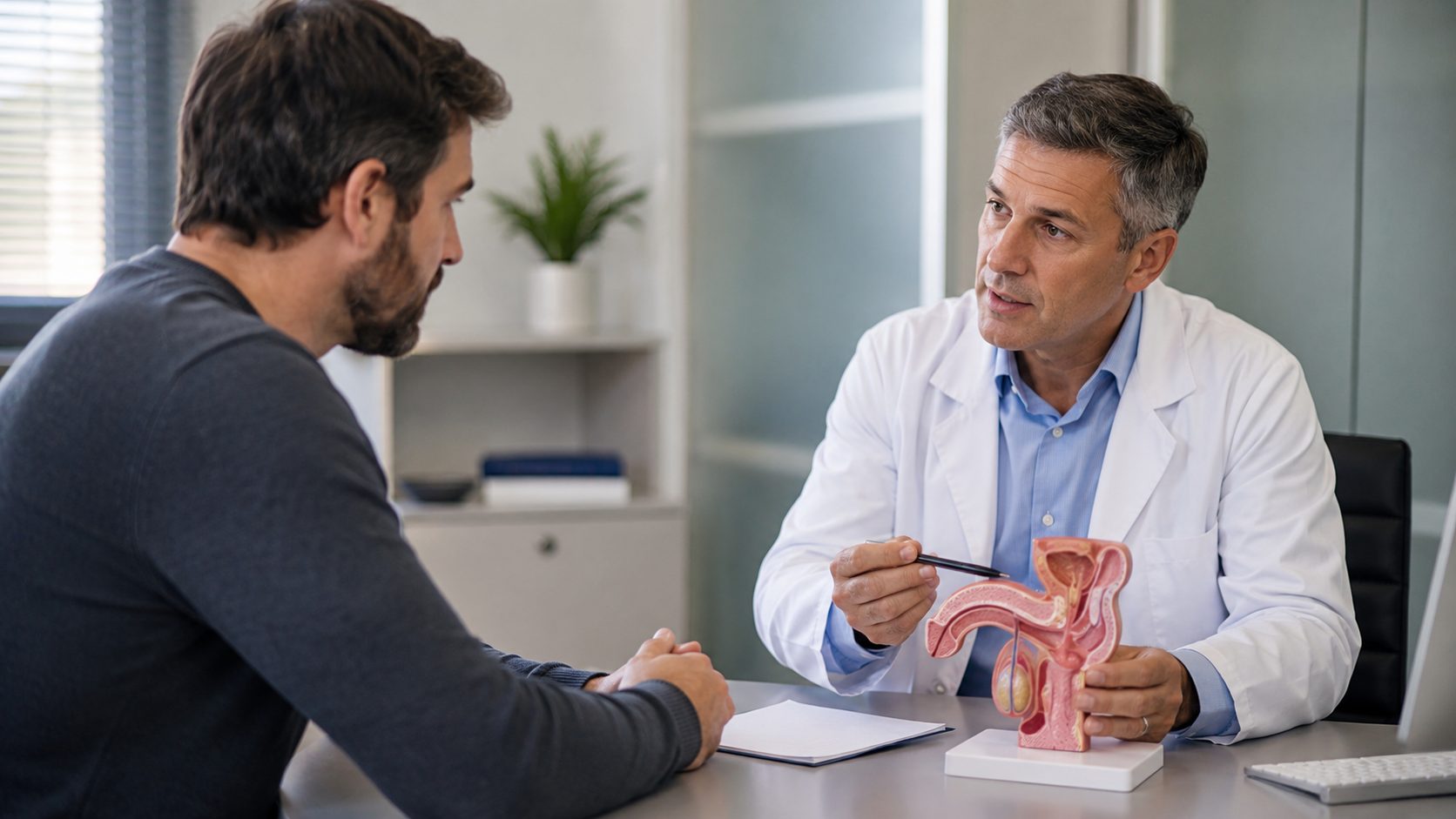
Pain during erections in Peyronie’s disease usually relates to changes in how the penile tissue stretches under pressure. The discomfort is not simply caused by “having a bend.” The underlying issue is often mechanical tension within tissue that has become less flexible.
During a normal erection, blood fills the erectile chambers and the surrounding tissue expands evenly. This expansion allows the penis to become firm while maintaining structural support along its length.
Peyronie’s disease changes that behaviour.
When scar tissue, commonly referred to as plaque, forms within or around the tunica albuginea, the affected area becomes less elastic than the surrounding tissue. The tunica albuginea is the fibrous layer that surrounds the erectile chambers and plays a central role in rigidity and shape during erection.
Healthy tissue stretches. Plaque does not stretch normally. That difference creates uneven forces during an erection.
Scar Tissue and Plaque Formation
Plaque in Peyronie’s disease is not the same as surface scar tissue you might see on skin.
It forms deeper within penile structures and behaves more like dense fibrous tissue. This tissue is less compliant and resists normal expansion.
In the active phase of Peyronie’s disease, plaque may still be developing, remodelling or becoming more fibrotic. During this stage, the surrounding tissue may also be inflamed or mechanically stressed.
That combination can contribute significantly to pain.
If you want a deeper explanation of plaque formation, our guide on what Peyronie’s plaque is explains how these tissue changes develop.
Changes in Tissue Flexibility
One of the most important concepts in understanding Peyronie’s pain is elasticity.
The penis does not expand uniformly when plaque is present.
One section may stretch normally while another resists expansion. This creates localised tension, similar to pulling tight fabric where one section no longer gives under strain.
That uneven stretch can create pain, pressure or a pulling sensation during erection.
Some men describe this as though part of the penis feels tight or restricted rather than sharply painful.
Many men delay assessment because they tell themselves it does not feel like pain in the traditional sense. In practice, abnormal tension or restricted stretching can be just as clinically relevant.
Why Erections Trigger Discomfort
Pain often becomes most noticeable during full rigidity because that is when mechanical tension is highest.
A man may have no discomfort while flaccid or partially erect, only noticing symptoms at 90–100% erection. This pattern is common.
Some patients describe erections as comfortable initially, with discomfort increasing as rigidity peaks. Others notice pain only during thrusting, when additional mechanical pressure is applied.
This can affect intimacy significantly, particularly when pain creates hesitation or anxiety around sex. Understanding the impact of Peyronie’s disease and sex is very important when looking to regain confidence and maintain sexual relationships.
What Pain During Erections Can Feel Like
Pain associated with Peyronie’s disease varies considerably between individuals.
Understanding how pain presents helps explain why some men struggle to recognise the condition early.
The word pain can be misleading because not everyone experiences classic pain.
Some men report:
- sharp focal pain
- deep aching
- burning discomfort
- pulling sensation
- tightness during full erection
- tenderness over a plaque
- discomfort during thrusting
These differences matter because symptom descriptions often influence how quickly someone seeks help.
A sharp stabbing pain is difficult to ignore, whereas, a vague sensation of internal tightness or stretching is easier to rationalise or dismiss.
Pain During Erections
Many men notice discomfort only during erections.
The penis may feel completely normal while flaccid, making symptoms harder to identify during day-to-day life. This often creates confusion.
A man may feel entirely normal until sexual arousal triggers expansion and mechanical stress within the affected tissue.
Pain During Sexual Activity
Sex introduces additional forces beyond erection alone.
Penetration, thrusting and directional pressure can increase stress around plaque or deformity.
Some men report that intercourse feels manageable initially but becomes uncomfortable during sustained activity.
Others avoid specific positions because they consistently trigger discomfort.
Why Symptoms Vary
Pain severity varies because Peyronie’s disease itself varies.
Important factors include:
- plaque location
- plaque size
- degree of inflammation
- disease stage
- curvature severity
- erectile rigidity
Two men with similar curvature may experience very different pain patterns.
How Plaque Changes the Way the Penis Stretches
Plaque changes more than shape. It changes mechanics.
This is one of the clearest differences between Peyronie’s disease and natural penile curvature.
A naturally curved penis may function normally without pain because tissue still stretches evenly.
Plaque changes that behaviour.
Reduced Elasticity
A plaque creates a localised area of reduced elasticity.
During erection, the surrounding healthy tissue expands while the scarred segment resists expansion. This creates a mechanical imbalance and concentrated tension.
Uneven Stretching
As tension increases, the shaft no longer expands symmetrically.
Over time, repeated asymmetric expansion may contribute to visible deformity.
This may include:
- curvature
- narrowing
- indentation
- hourglass deformity
- hinge instability
Pain may develop before these changes become visually obvious.
That is clinically important because some men first experience painful erections months before they notice curvature.
Curvature Development
As plaque matures, curvature often becomes more noticeable.
Pain does not always worsen alongside curvature. In many men, the opposite happens.
Pain may reduce as plaque stabilises, even while deformity becomes more established. This often surprises patients who assume worsening curvature should always mean worsening pain.
The Difference Between Early Stage and Long-Term Pain
Pain patterns often change as Peyronie’s disease progresses.
Much of this variation relates to whether the condition is in an active or stable phase, as symptoms often behave differently depending on which stage the disease has reached.
Active Phase Symptoms
Pain is often more common during the active phase, when tissue changes are still evolving.
During this stage, men may notice:
- worsening pain
- new curvature
- palpable plaque
- increasing deformity
- changing erections
This phase can feel unpredictable because symptoms may evolve over weeks or months.
Stable Phase Symptoms
Once the condition becomes more stable, some men notice that pain improves or disappears.
Calcification can occur in some men during the stable phase, but it isn’t a defining feature of stable disease and isn’t present in every patient. Referring to plaque maturation or reduced tissue remodelling is more accurate for a general patient guide.
Curvature, shortening or deformity may still remain.
Why Experiences Differ
Pain progression is not predictable.
One patient may experience intense early pain that later settles. Another may continue experiencing discomfort long after curvature stabilises. Neither pattern automatically indicates severity.
This variability is one reason individual assessment remains important.
When Pain During Erections Should Be Checked
Pain during erections should be assessed when symptoms are persistent, worsening or associated with structural change.
It is especially worth seeking advice if you notice:
- new curvature
- palpable lumps or plaque
- worsening pain
- narrowing or indentation
- erectile changes
- difficulty during intercourse
Many of these changes overlap with common Peyronie’s disease symptoms, particularly during the active phase when curvature, plaque or deformity may still be evolving.
Pain that interferes with sexual activity or creates persistent anxiety deserves proper evaluation.
The goal is not simply to label the symptom.
It is to understand what may be causing it.
How a Men’s Health Specialist Can Assess the Cause
Assessment helps determine whether pain may be related to Peyronie’s disease or another condition affecting penile health.
A specialist will usually want to understand how symptoms began, how they have changed and what happens during erection.
Assessment often includes:
- symptom history
- physical examination
- plaque assessment
- discussion of curvature
- erectile function review
- symptom timeline
The consultation is not just about identifying pain.
It is about understanding the wider structural and functional picture.
Pain during erections may relate to Peyronie’s disease, but it can also arise from other causes. Proper assessment helps separate those possibilities and provides clarity around what may happen next.
Depending on findings, discussions may include monitoring, conservative management or broader Peyronie’s treatment options where appropriate.
Peyronie’s disease can cause pain during erections, particularly during the earlier stages when plaque formation and tissue changes may still be developing.
Pain may feel sharp, aching, tight or mechanical, and symptoms can vary widely between individuals. Some men notice pain before curvature becomes obvious, while others experience discomfort only during intercourse or at full rigidity.
Pain does not always indicate Peyronie’s disease, but persistent pain alongside curvature, plaque or erection changes deserves further assessment.
If you are experiencing pain during erections and are unsure what may be causing it, speaking with a specialist can help you understand your symptoms and possible next steps. If you would like confidential guidance, you can contact us for further support.